
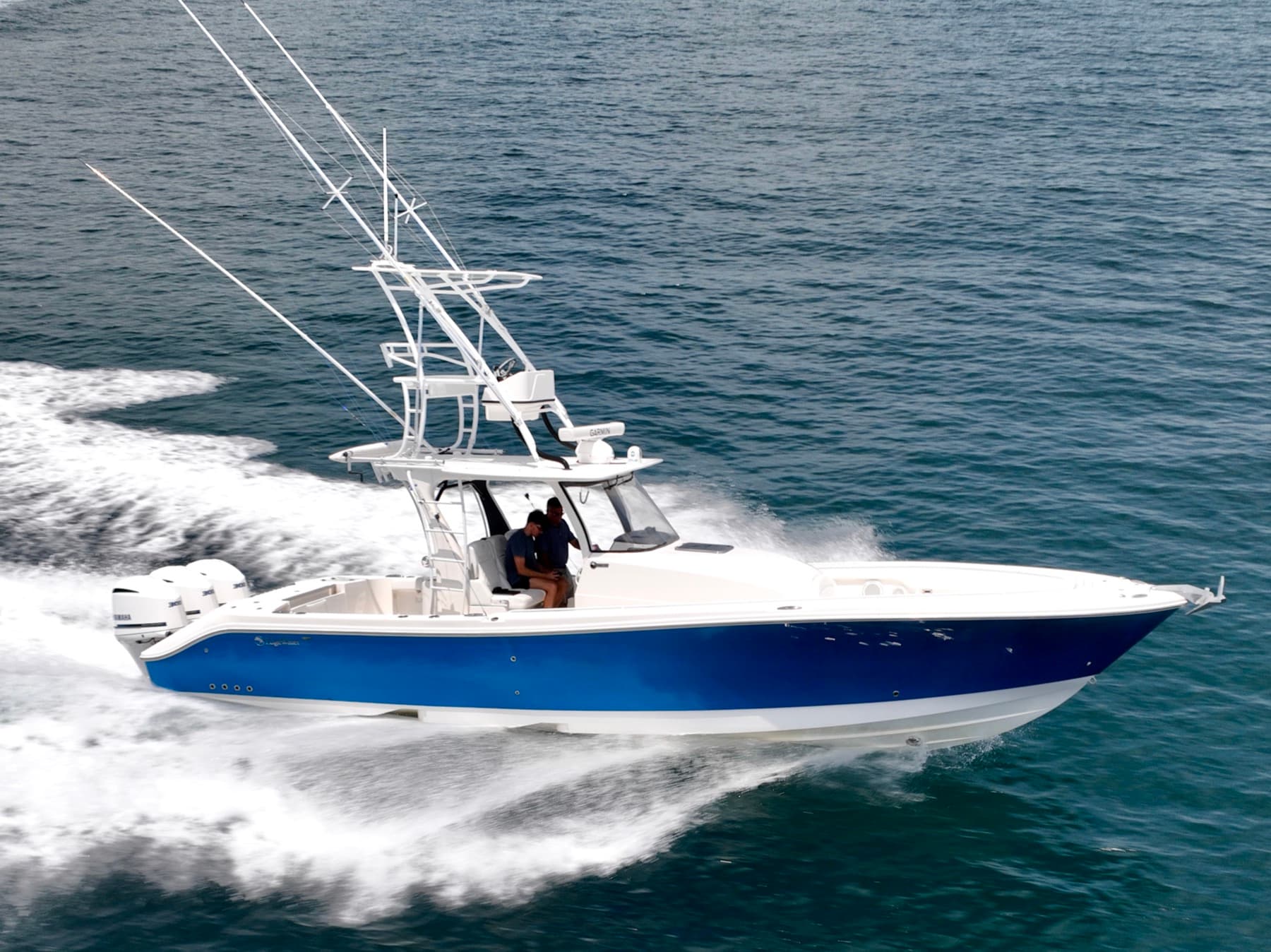
Buy the Boat You Will Actually Use
Most buyers start with a length and work backwards. Start with the nights you will spend aboard, the water you will cross and what you are prepared to spend keeping her, and the length answers itself. Here is what each one costs, carries and gives up.
Where we work
Fifty to a Hundred and Forty-Five Feet
That is the range we specialise in. Motor yachts, sportfish, express cruisers and trawlers, most densely between 60 and 110 feet, where we know the builders, the yards, the surveyors and what boats actually close at rather than what they ask.
It is where we specialise, not a rule about who we work with. Our closed sales run from a 27′ centre console upwards, and we would far rather find a client the right thirty-eight than sell them the wrong eighty. If the boat you want sits outside the range, we will still handle her properly, and say so if somebody else is better placed.
The first decision
What Each Length Really Means
South Florida figures, for a boat kept in a marina and used normally. The annual column is total cost of ownership as a share of what she is worth, dockage, insurance, maintenance, fuel and crew, which is the only way to compare a forty-five and a hundred and twenty on the same line.
| Length | What she is for | Cabins | Crew | Dockage / yr | All in / yr |
|---|---|---|---|---|---|
| 30 to 45 ft | Day running, weekends aboard, fishing. Owner at the helm, no professional help. | 1 to 2 | None | $8k to $20k | 6 to 8% |
| 45 to 60 ft | Long weekends, the Bahamas in settled weather, a family aboard for a week at a time. | 2 to 3 | None, or a captain by the day | $15k to $30k | 8 to 10% |
| 60 to 80 ft | Extended cruising, guests in real comfort, crossing to the islands when you choose to. | 3 to 4 | A captain, usually full-time above 70ft | $28k to $55k | 10% |
| 80 to 110 ft | Guests in cabins with their own heads, crew accommodated apart from them, and the tankage for a season away. | 4 to 5 | Captain, mate, stewardess | $55k to $110k | 10 to 12% |
| 110 to 145 ft | A yacht run as an operation: crew accommodation, a tender garage, ocean passages. | 5 to 6 | 4 to 7 full-time | $110k to $250k | 12 to 15% |
About 40 feet
Where a boat becomes genuinely liveable overnight for more than two people: a separate head, a galley worth cooking in, and enough freeboard for a following sea in the Stream.
About 70 feet
Where a full-time captain stops being a luxury. Not because you cannot handle her, plenty of owners do, but because the maintenance schedule becomes a job, and an unattended boat of this size deteriorates fast.
79 feet
Regulatory and practical lines. Above 79 feet a yacht falls under commercial coding regimes if she is ever chartered, insurance is underwritten differently, and a good many marinas price, and cap, by this length. The rule itself is written as 24 metres, which is where the odd number comes from.
About 100 feet
Where crew get their own accommodation rather than a cabin taken from the guests, which is what makes long periods aboard work for everybody on her.
The second decision
How She Is Driven
The one specification that changes what a boat costs to keep, where she can be fixed and how she holds her value. Two identical hulls with different drives are not the same purchase.
Pod drives (IPS, Zeus)
- In their favour
- Joystick docking a beginner can learn in an afternoon, ten to fifteen per cent less fuel at cruise, quieter, and more usable volume aft because the engines sit further back.
- Against
- A grounding that a shaft would shrug off can cost a pod. Service is dealer-tied, and the seal and drive services on a fixed interval are the real cost of ownership.
- Buy them for
- Florida and the Bahamas, an owner-operator, a boat you will keep five to seven years.
Straight shafts
- In their favour
- Cheap to maintain, forgiving of a grounding and of neglect, serviceable by any competent yard anywhere in the world, and proven over decades.
- Against
- Harder to dock without thrusters, noisier, less efficient, and the shaft angle costs you interior volume aft.
- Buy them for
- Long-range and remote cruising, sportfish boats, and any owner keeping her ten years or more.
Outboards
- In their favour
- Nothing below the waterline to corrode, repowering costs a fraction of an inboard rebuild, the whole cockpit stays usable, and shallow water stops being frightening.
- Against
- Fuel burn at speed, noise at the transom, and a resale market that judges the boat almost entirely on engine hours.
- Buy them for
- Centre consoles and bay boats to about 45 feet, and anybody running the flats or the Bahamas banks.
And How She Carries Herself
| Hull | Cruise | Fuel | What you are choosing |
|---|---|---|---|
| Planing | 22 to 35 knots | 50 to 200 gph | Gets you there and back in a weekend. Uncomfortable in a head sea below planing speed, and expensive to run at it. |
| Semi-displacement | 12 to 20 knots | 20 to 60 gph | The compromise most 60 to 90 footers make: enough speed to beat weather, enough efficiency to cross. |
| Displacement / trawler | 8 to 12 knots | 5 to 25 gph | Range measured in thousands of miles and a motion that lets people sleep. You will not outrun weather; you plan around it instead. |
Before you start looking
Six Answers That Narrow the Market to a Shortlist
- 01
Where she will live
The slip decides the boat more often than the boat decides the slip. Confirm what your marina can take, length, beam, draft and air draft, before you fall for a hull.
- 02
Nights aboard a year
Ten nights and a hundred nights are different boats. Be honest: this is the number that separates a happy owner from a boat for sale in eighteen months.
- 03
Who is driving
You, a captain by the day, or full-time crew. It changes the drive, the length and the running cost more than any other answer here.
- 04
How far, and in what
A run to Bimini in settled weather asks little. The Abacos in December, or the Keys with a family aboard, asks for range, motion and a boat that can wait out a front.
- 05
The all-in budget
Purchase plus ten per cent a year, plus ten to fifteen per cent held back for the first season's list. A boat bought with the last dollar is a boat you resent.
- 06
How long you will keep her
Under five years, buy for resale. Popular builders, common layouts, sensible colours. Over ten, buy for how she is built and stop worrying about the market.
Straight answers
The Questions We Get Asked
On the dock, mostly. If yours is not here, ring the office and ask it, we would rather talk you out of the wrong boat than sell you one.
(954) 560-2811What size yacht should I buy?
Size her to the nights you will actually spend aboard with guests, not to the guests you might one day carry. A couple who cruise weekends are well served between 45 and 60 feet with no crew. A family who take a week in the Bahamas want 60 to 80. Past about 70 feet a full-time captain becomes effectively required, and past 100 the crew need their own accommodation. The most common mistake is buying the largest boat affordable and then using her less because every outing needs planning and staff.
What range of yachts does Aspire specialise in?
Fifty to a hundred and forty-five feet is where we work most: motor yachts, sportfish, express cruisers and trawlers, with the heaviest concentration between 60 and 110. That is where we know the builders, the yards and what boats actually close at. It is not a restriction, though. We sell centre consoles from the mid-twenties up, and we would rather find a client the right 38-footer than sell them the wrong 80.
Pods or straight shafts?
Pods for a Florida and Bahamas boat with an owner at the helm: they dock beautifully, run quieter and burn ten to fifteen per cent less at cruise. Straight shafts for long-range or remote cruising, for sportfish, and for anybody keeping her a decade. They cost less to maintain, tolerate a grounding, and can be serviced anywhere in the world. On any pod boat, check the service history and when the seals were last done; that interval is the real cost.
Diesel or gas?
Above about 35 feet, diesel, almost always. Diesels run two to three times the hours before a rebuild, lose value more slowly, and are far safer on a boat with accommodation and a galley. Gas is cheaper to buy and to rebuild and makes sense on smaller centre consoles and day boats. The crossover is usage: over roughly 150 hours a year, diesel wins on running cost as well as on everything else.
What does a yacht cost to run each year?
Ten per cent of her value a year is the working rule, all in, for a boat used normally and kept properly. Under 50 feet it is nearer six to eight per cent; over 110 feet with full-time crew it is twelve to fifteen. On a two-million-dollar motor yacht that is roughly 40,000 to 90,000 in dockage depending on the marina, 20,000 to 35,000 in insurance, 40,000 to 60,000 in maintenance and haul-outs, plus fuel and any crew. Boats that are used regularly cost less to keep than boats that sit.
New build or brokerage?
A new boat costs you twenty to thirty per cent in the first three years and buys you a warranty, your own specification and nobody else's neglect. A brokerage boat lets somebody else take that depreciation. The best value on the market is usually neither: a twelve to eighteen year old hull from a good yard with a recent refit, new generators, new electronics, done tanks, at a fraction of what the same capability costs new.
How much should I keep back for the first year?
Ten to fifteen per cent of the purchase price beyond the closing. Every boat has a list after survey, and the first season is when you find what the survey did not: a tired generator, electronics that were fine at the dock, canvas that has one summer left. Buyers who spend the last dollar on the boat itself are the ones who end up unhappy with her.
Now Go and Look at Some Boats
Tell us the six answers above and a broker comes back with the boats worth your time, from the whole market, not only ours, and is aboard each one with you, then through the survey, the offer and the closing. No fee to you for any of it.