
Your First Yacht, in Order
Nine steps, about ninety days, and roughly four per cent of the purchase price in costs that are not the boat. Here is each one. What it costs, how long it takes, and where first-time buyers get caught.
What it costs besides the boat
Budget Four Per Cent, and the Tax
South Florida figures for a brokerage purchase. The survey costs are yours whether you buy the boat or walk away from her, which is the point of them.
| What | Typically | Worth knowing |
|---|---|---|
| Deposit into escrow | 10% of the offer | Refundable on your contingencies. Held by a brokerage escrow account, never by the seller. |
| Condition and valuation survey | $25 to $35 per foot | Yours, and so is the report. A 60-footer runs roughly $1,500 to $2,100. On a small boat a surveyor charges a minimum day rate instead. Ask what theirs is before you book. |
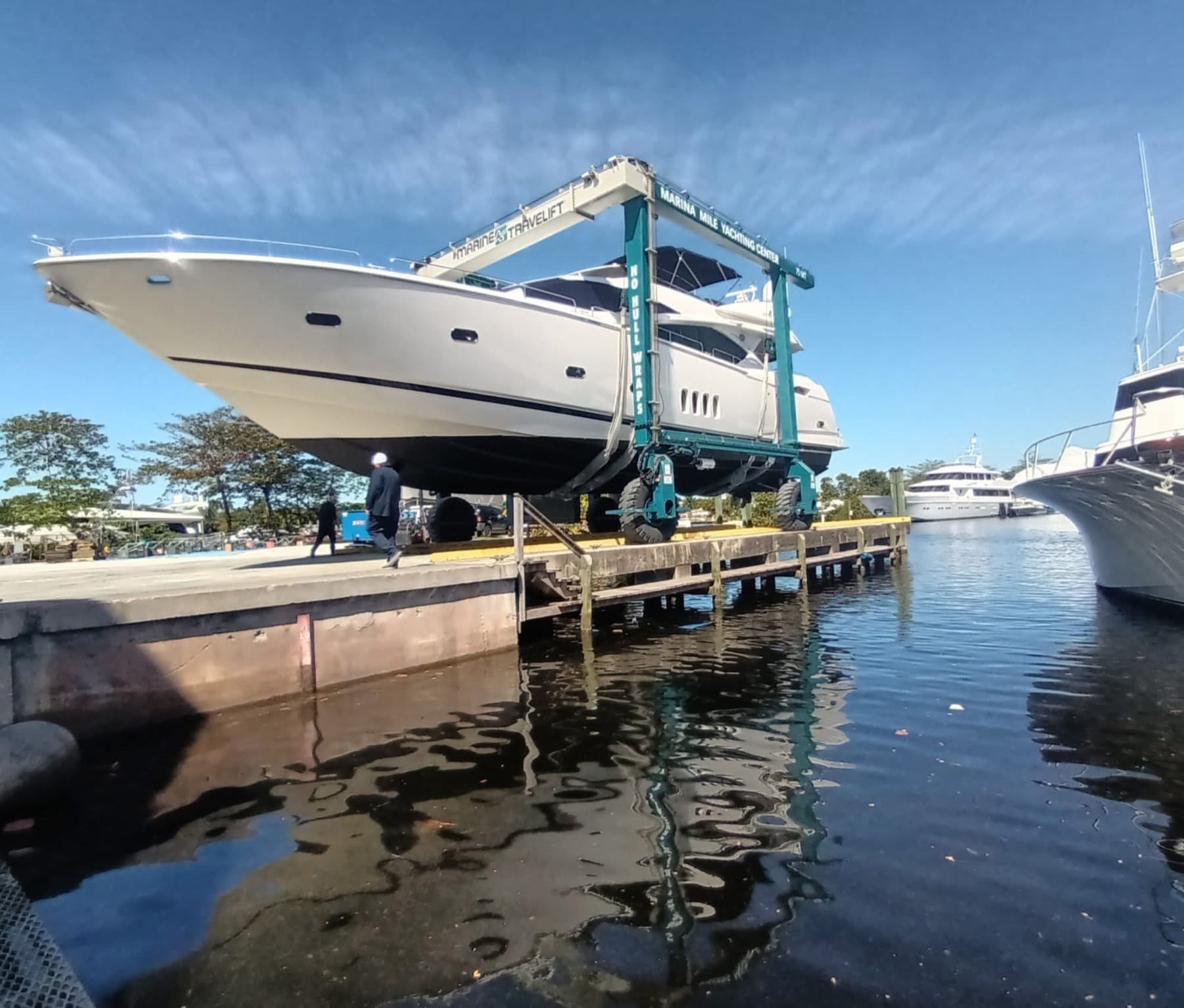
| Haul-out for the survey | By the foot, min. applies | Yards charge per foot to lift and block her and nearly all set a minimum. Roughly $400 to $1,200 for a haul, block and splash; lay days extra if she stays up. |
| Engine survey and oil analysis | $800 to $2,500 | Separate from the hull survey and worth every dollar. Two engines and two generators is the upper end. |
| Sea trial | Usually included | Fuel is the seller's on most deals. Run her at cruise for long enough to get everything hot. |
| Florida sales or use tax | 6%, capped at $18,000 | The $18,000 is the ceiling on everything. The county surtax on the first $5,000 comes out of it, not on top. The cap is why boats close in Florida. |
| USCG documentation or state title | $500 to $1,850 | Documentation for anything financed or cruising foreign waters; state registration otherwise. |
| First year's insurance | 1 to 2% of value | Higher for a named-storm cruising area, an older hull, or an owner with no history on that size. |
Tax rates and caps change, and the detail is in our Florida yacht tax guide, and your broker confirms the current position before closing.
The process
Nine Steps, About Ninety Days
- 01
Work out the whole budget, not the purchase price
Before you look
Purchase price, plus roughly ten per cent of her value every year to keep her, plus ten to fifteen per cent of the purchase held back for the first season's list. Confirm the slip before the boat: length, beam, draft and air draft, and what it costs where you actually want to keep her.
Where it goes wrongSpending the last dollar on the boat. The first year always costs more than the survey suggested, and an owner who cannot fund it stops using her.
- 02
Get pre-approved if you are financing
Before you offer
Marine lenders run ten to twenty year terms and want a survey, a valuation and insurance in place before they fund. Pre-approval takes a week or two and tells you the real budget; it also makes your offer worth more than an unfunded one.
Where it goes wrongLeaving finance until after the offer. It is the step most likely to add three weeks, and the seller may not wait.
- 03
Appoint your own broker
Before you view
A listing broker is engaged by the seller; a buyer's broker reads the deal from where you stand and has the same IYBA MLS access to every listing on the market. Pick one who has sold the size and type you are after, and who has been aboard enough of them to tell you what goes wrong with that model. There is no fee to you for having them. The commission comes from the seller at closing either way. Where the same firm holds the listing you want, that is dual representation: ordinary in this business, disclosed in writing, and handled straight with both parties.
Where it goes wrongRinging five listing brokers instead of one buyer's broker. You end up shown five boats that five firms happen to be holding, and nobody is looking across the whole market for you.
- 04
See boats, in person, in a run
Weeks 1 to 6
Photographs flatter every boat. Walk three or four in a week rather than one a month: comparison is what teaches you the market, and by the fourth you will see condition rather than upholstery. An Aspire broker is aboard for every one of them.
Where it goes wrongFalling for the first boat. There is almost always a better example of the same model within a month's search.
- 05
Make a written offer, with contingencies
Day 1 of the deal
Price, deposit, and the conditions that let you out: satisfactory survey, satisfactory sea trial, and financing if you need it. Ten per cent deposit goes into an escrow account, not to the seller. Expect a counter; most deals settle within two rounds.
Where it goes wrongAn offer without a survey contingency. It is the clause that makes the deposit refundable, and no reputable broker will let you sign without it.
- 06
Survey, haul-out and sea trial
Weeks 2 to 4 of the deal
A condition and valuation survey on the hard, an engine survey and oil analysis by a mechanic, and a sea trial in something like real conditions. You pay for these. They are yours, and so is the report. Be there for all three if you possibly can.
Where it goes wrongBooking the surveyor the seller recommends. Find your own, accredited by SAMS or NAMS, with no relationship to either brokerage.
- 07
Renegotiate on the findings, or walk
Within days of the report
Every boat surveys with findings. Sort them into safety items, things that will fail this year, and cosmetics. Then ask for the first two as a price adjustment or as work done before closing. This is where a broker who knows what these repairs cost earns their keep.
Where it goes wrongTreating the survey as pass or fail. It is a negotiating document, and the ordinary findings are worth real money off.
- 08
Insurance bound, closing funds ready
The week before
Underwriters want the survey, your boating history and the cruising area, and they will not bind on the morning of the closing. Budget one to two per cent of her value a year, more for a named-storm area or a new owner with no history on that size.
Where it goes wrongAssuming cover is a formality. Insurance is the most common last-minute delay on boats over twenty years old.
- 09
Closing, documentation and delivery
Closing day
Funds move from escrow, the bill of sale is executed, and title transfers. USCG documentation for a documented vessel or state registration otherwise, plus Florida sales or use tax. Walk her one last time before you sign to confirm nothing has changed and the agreed work is done.
Where it goes wrongNot checking for liens. A yard bill or an unsatisfied mortgage follows the boat, not the person who left it there, which is the single strongest argument against a private sale.
Tick as you go
The Checklist Itself
Twenty-four things to have done, in the order you will need them. It remembers what you have ticked, so come back to it as the purchase moves, no account, no email address, and nothing sent to us.
0 of 24 done. Kept in this browser, not on our server
Before you look
While you are looking
Under contract
Before closing
Learned the hard way
Five Mistakes We Watch First-Time Buyers Make
Buying the biggest boat you can afford
The most reliable predictor of a boat being back on the market in two years. Every foot adds dockage, fuel, maintenance and planning, and the owners who use their boats most are usually the ones who bought ten feet less than their budget allowed.
Skipping the engine survey
The hull survey does not cover the engines properly, and the engines are the most expensive thing on the boat. An oil analysis costs a couple of hundred dollars and has ended more bad deals than any other single document.
Going through the whole thing unrepresented
A listing broker will deal with you honestly, the good ones always do, but they were engaged by the seller, and on a boat they hold they are balancing two parties rather than reading the deal from where you stand. Having somebody who has walked a hundred of these hulls costs you no fee, so there is no reason at all to go without it.
Ignoring where she has lived
A boat that has sat in the sun on a lift in fresh water is a different proposition from the same model kept in the salt with the systems run weekly. Ask for the last three years of service records and read where she was.
Underestimating the first season
Canvas, electronics, batteries, a tender, safety gear, bottom paint, the small yard list nobody surveys for. Hold back ten to fifteen per cent of the purchase price and the first year is a pleasure rather than a series of invoices.
Start at Step Three
Appointing a broker is the step that makes the other eight easier. Tell us what you are after and we will find the boats worth your time, from the whole market rather than only ours, and be aboard each one with you.